Inbound QC Workflows for Contract Food Ingredient Blenders
For a contract food ingredient blender, receiving is not just a dock function. It is the point where a supplier promise becomes a usable production input.
Enzyme ingredients add extra pressure because they often carry customer-facing requirements: formula compatibility, allergen position, country of origin, dietary documentation, shelf-life expectations, and lot traceability. When one document is missing or one label detail conflicts with the purchase order, a planned blend can move from ready to staged to quarantined in minutes.
BatchLoom supports bulk food enzyme sourcing for ingredient blenders with the procurement controls that matter before material ever reaches a ribbon blender: approved supplier alignment, consistent lots, practical pack sizes, COA availability, lead-time visibility, and documented substitution pathways.
Why inbound QC deserves sourcing attention
Many blending operations treat inbound QC as a quality department checkpoint. That is only half the workflow.
For enzyme materials, inbound QC works best when sourcing, quality, planning, and warehouse teams agree on what acceptable looks like before the purchase order is issued.
A stronger inbound program helps reduce:
- Quarantine holds caused by missing COAs or inconsistent lot codes
- Rework from incorrect labels, pack sizes, or customer-specific documentation gaps
- Production delays when a replacement enzyme has not been pre-reviewed
- Excess inventory created by overbuying a slow-moving specialized ingredient
- Customer questions that take days to answer because supplier records are scattered
The goal is not more paperwork. The goal is faster release with fewer unresolved questions.
The enzyme-specific receiving file
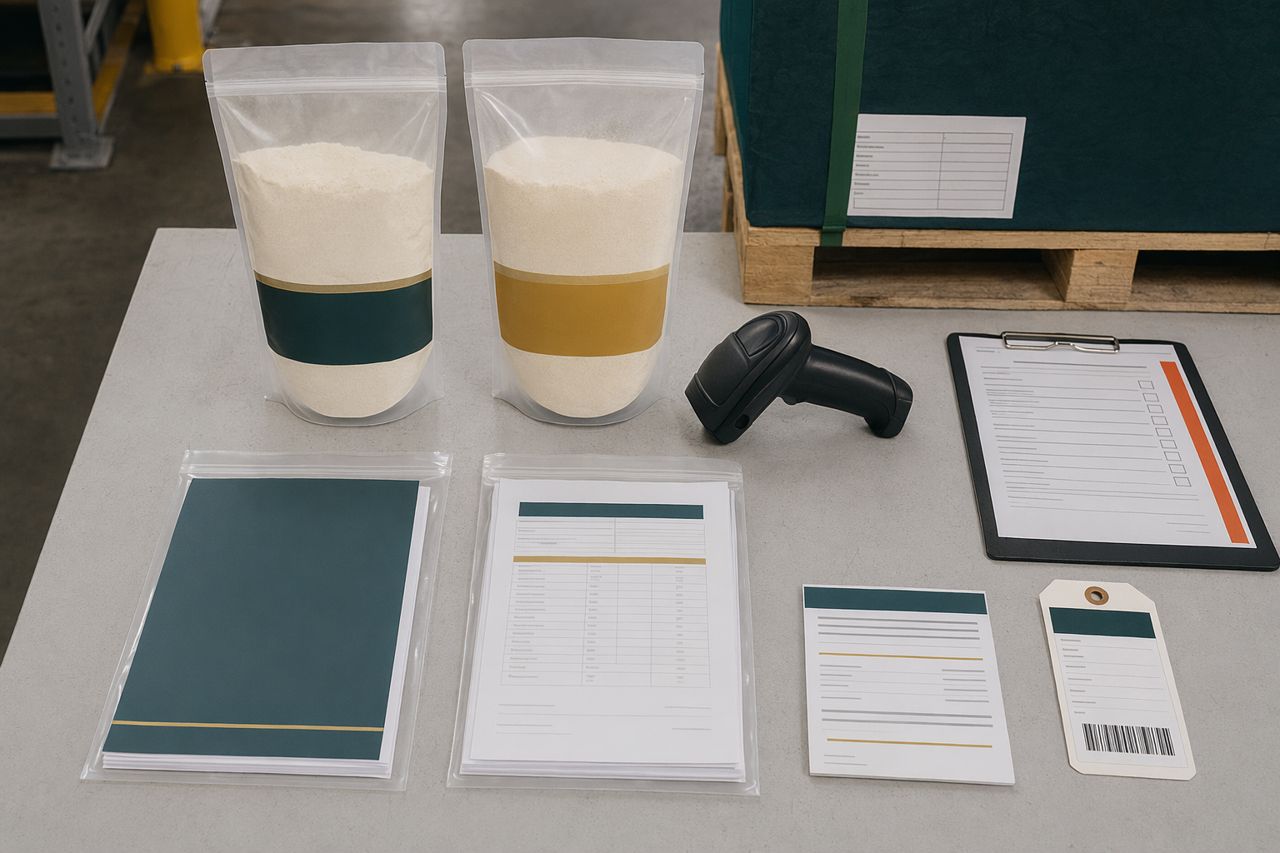
For each enzyme ingredient, contract blenders should maintain a receiving file that is simple enough for daily use and complete enough for customer audits.
Core records to align before receipt
- Approved supplier name and supply location
- Current specification sheet
- COA expectations for each lot
- Declared functional strength band, without relying on internal reinterpretation
- Ingredient name, enzyme type, and intended food-use category
- Allergen statement and cross-contact position
- Non-GMO, vegan, kosher, halal, or other customer-relevant declarations when required
- Country of origin and manufacturing origin statements where applicable
- Shelf life, storage condition, and retest guidance
- Pack size, pallet configuration, and inner packaging format
- Lot coding format and traceability contact pathway
When these items are agreed up front, receiving teams can compare the delivery against an established record rather than making judgment calls at the dock.
A practical inbound QC sequence
1. Match the purchase order to the approved material
The first check should confirm that the shipment matches the approved item, not only the broad enzyme category.
For example, an amylase, protease, lipase, lactase, cellulase, or pectinase may look correct at a category level but still be wrong for a customer formula if supplier status, declared strength band, carrier system, allergen position, or documentation package differs.
A useful PO reference should include:
- BatchLoom material reference or customer-approved item code
- Supplier item name
- Required pack size
- Required documentation set
- Target delivery window
- Any customer-specific restrictions
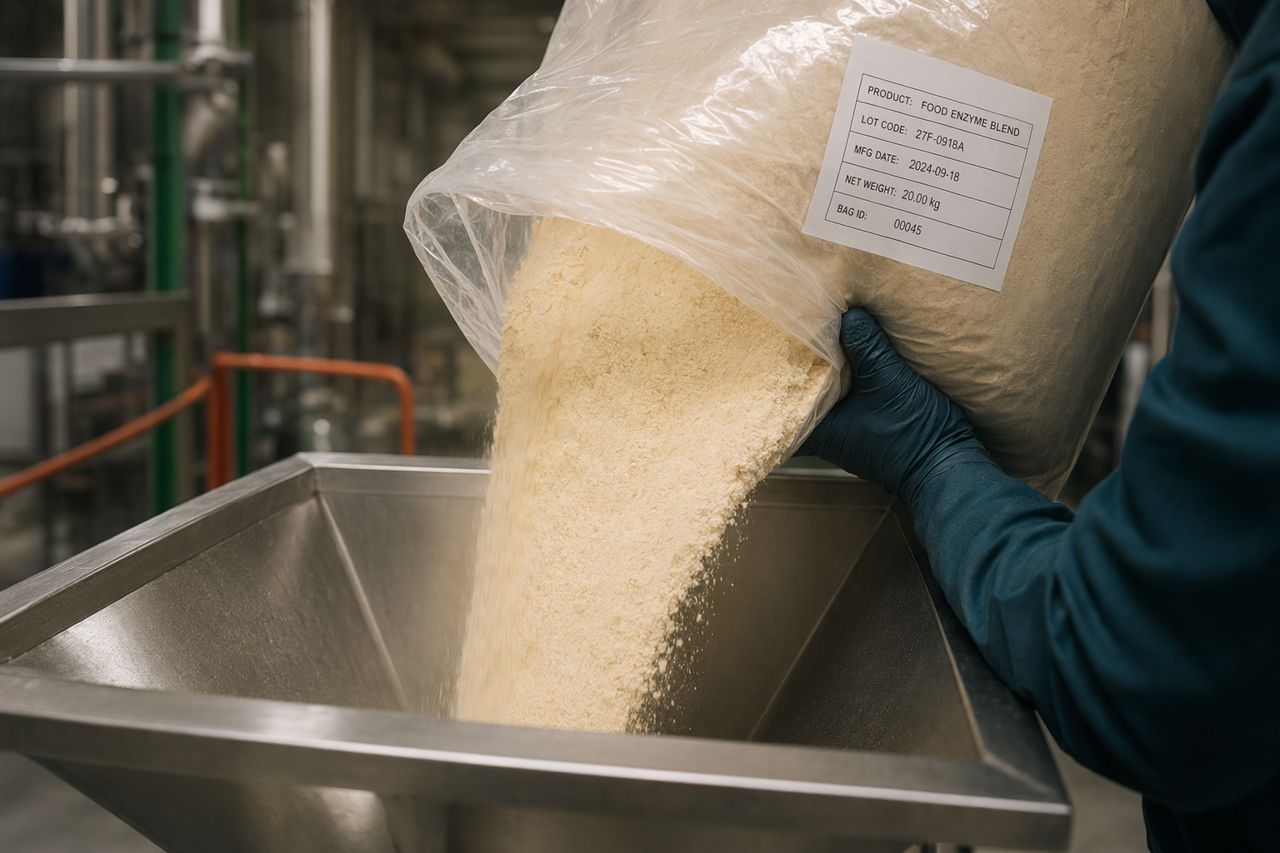
2. Verify labels before moving material to staging
Label review should happen before the material is put into general ingredient staging.
Check for:
- Supplier name
- Product name
- Lot number
- Net weight
- Manufacture or production date, when provided
- Best-before or expiry date
- Storage requirements
- Food-grade designation or equivalent food-use labeling
- Allergen or handling statements where required
A label mismatch does not always mean the material is unusable. It does mean the lot should not move forward until the discrepancy is resolved and documented.
3. Attach the COA to the lot, not just the shipment
A COA is most useful when it is tied to the specific lot being received. In multi-lot shipments, each lot needs its own document trail.
Your receiving workflow should prevent common gaps:
- One COA supplied for multiple lots without clear coverage
- COA received after the shipment arrives
- COA filed under supplier name only, not lot number
- COA values or descriptions that conflict with the current specification
- Customer-required statements missing from the document package
BatchLoom helps procurement teams define COA expectations before ordering, so quality teams are not chasing documents during production week.
4. Confirm physical fit for the blend room
Inbound QC should include operational fit, not just document fit.
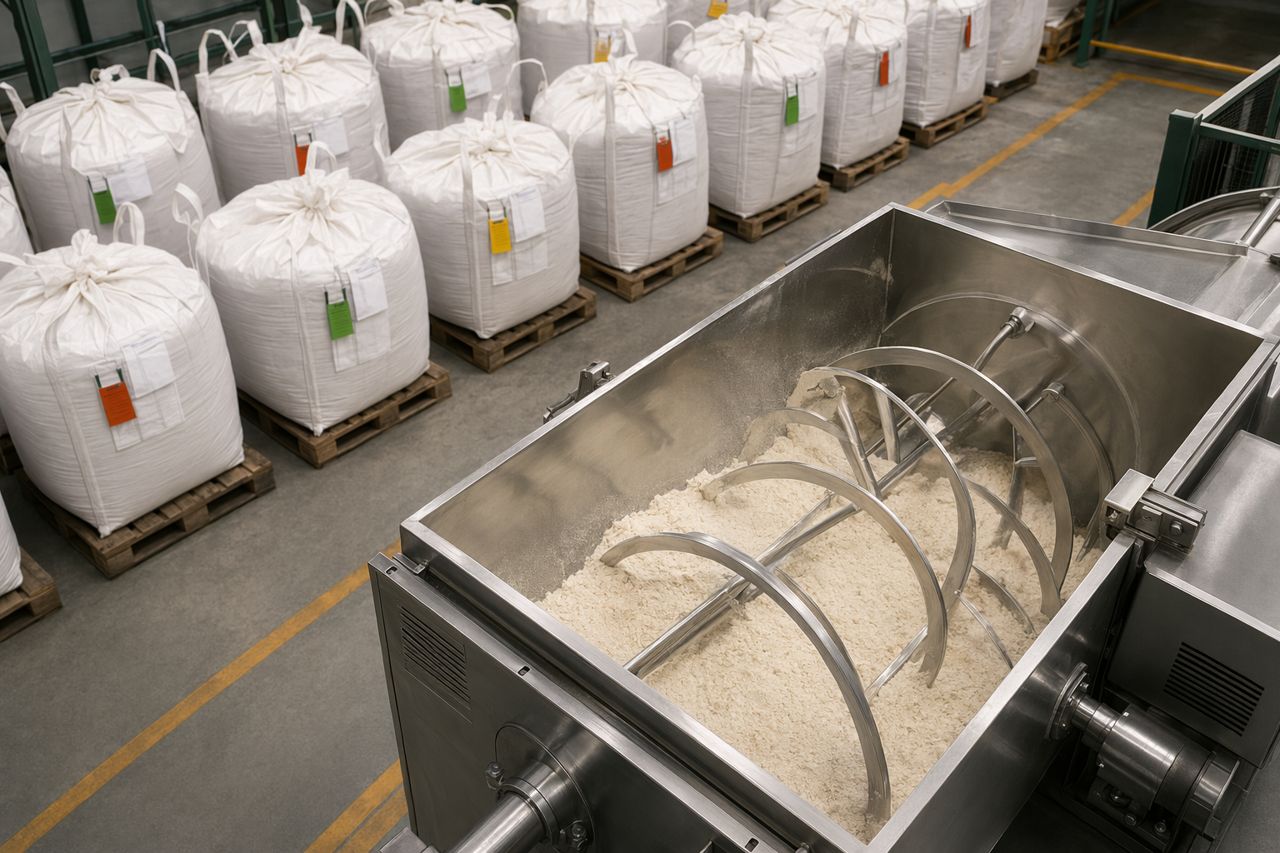
For dry enzyme ingredients, blenders often need to confirm whether the material is compatible with existing handling, weighing, sieving, and addition steps. The right sourcing decision considers how the ingredient will behave in the plant.
Operational checks may include:
- Powder flow and handling notes
- Packaging integrity
- Inner liner condition
- Visible contamination concerns
- Clumping or compaction observations
- Storage temperature suitability
- Compatibility with current batch size and scale-up needs
These checks are especially important when replacing an enzyme source or moving from sample approval to bulk supply.
Build a release matrix before the truck arrives
A release matrix gives receiving and quality teams a clear decision path. It should define which mismatches are administrative, which require supplier confirmation, and which require a quarantine hold.
Example inbound decision matrix
| Checkpoint | Release-ready condition | Hold trigger |
|---|---|---|
| Supplier approval | Supplier and item match approved file | Unapproved supplier or unexpected manufacturing origin |
| Label | Product, lot, weight, and storage details match PO and spec | Product name, lot, or storage condition mismatch |
| COA | COA matches lot and current specification | Missing COA, wrong lot, outdated spec reference |
| Allergen position | Statement matches customer requirement | New or unclear allergen language |
| Shelf life | Meets minimum remaining shelf-life requirement | Short-dated lot without prior agreement |
| Pack size | Matches planned handling and inventory assumptions | Unapproved pack format or damaged packaging |
| Substitution | Replacement was pre-reviewed and documented | Last-minute alternative without quality and customer review |
This kind of matrix reduces subjective decisions and keeps production planning realistic.
Where sourcing teams can prevent QC delays
Inbound QC problems often start upstream. A sourcing manager can remove friction by making supplier expectations explicit in the quote and purchase order process.
Ask suppliers for the right commercial and quality details
Before confirming a bulk enzyme order, align on:
- Minimum order quantity and price breaks
- Standard lead time and rush-order feasibility
- Available pack sizes and pallet quantities
- Lot reservation options for repeat customer formulas
- Documentation lead time before dispatch
- Shelf-life guarantee at time of shipment
- Change notification process
- Substitution options for supply disruption
- Customer-specific document requirements
This is where procurement value becomes visible. The lowest quoted price is not the lowest cost if it creates a dock hold, late batch, or customer exception.
Managing substitution risk without production chaos
Contract blenders often need flexibility. A customer may approve a formula around one enzyme source, while supply constraints push the plant toward another. The wrong substitution workflow can create regulatory, functional, and commercial risk.
A controlled substitution file should capture:
- Original approved enzyme source
- Proposed alternate source
- Reason for substitution
- Matching specification criteria
- Carrier or excipient differences
- Allergen and dietary declaration comparison
- Shelf-life and storage comparison
- Customer approval status, if required
- First-production lot tracking plan
BatchLoom helps buyers structure replacement options before they become urgent. That means fewer emergency emails and fewer production windows lost to unresolved approvals.
What a good supplier handoff feels like
The right bulk enzyme sourcing partner should make inbound QC easier to execute, not harder to interpret.
A strong handoff gives your team:
- The right product in the agreed pack size
- A COA available when the shipment arrives
- Lot codes that are easy to match across label, COA, and invoice
- Clear allergen and dietary statements
- Practical lead-time guidance
- Repeatable documentation for repeat orders
- Early notice when supply, origin, or specification details may change
For contract blenders, this is not administrative polish. It is production protection.
BatchLoom’s role in enzyme sourcing for blenders
BatchLoom is built for buyers who need more than a catalog line. We help contract food ingredient blenders source bulk enzyme ingredients with a tighter connection between procurement, documentation, and plant use.
We can support sourcing conversations around:
- Amylase for bakery, grain, and starch-processing blends
- Protease for protein modification and specialty food applications
- Lipase for flavor and dairy-adjacent systems
- Lactase for lactose-reduction ingredient programs
- Cellulase, pectinase, and other process-support enzymes for food systems
- Customer-specific enzyme blends and replacement planning
Each request is handled around the commercial realities of contract blending: approved suppliers, predictable lots, bulk pricing, lead times, documentation expectations, and reduced substitution risk.
Request a quote for your next enzyme ingredient
If your inbound QC process is being slowed by missing documents, unclear substitutions, inconsistent lot records, or pack sizes that do not match your operation, BatchLoom can help organize the sourcing brief.
Use the on-site request a quote form and include:
- Enzyme type or current supplier item
- Target annual or project volume
- Desired pack size
- Required documentation
- Customer restrictions or allergen requirements
- Target delivery window
- Any approved-source or substitution constraints
Request a quote through the on-site form to start a bulk enzyme sourcing discussion built around your blending operation, not a generic catalog order.